


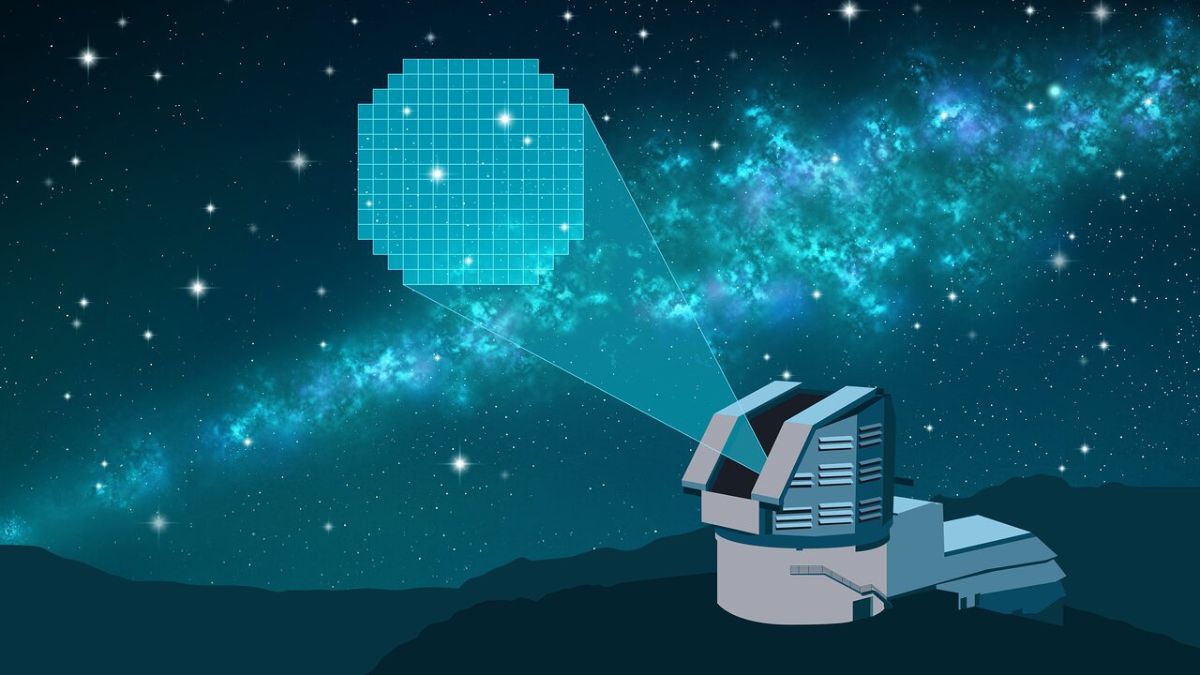
A major scientific breakthrough is anticipated with the Vera C. Rubin Observatory, currently under construction on Cerro Pachón in Chile, as it prepares to embark on its decade-long Legacy Survey of Space and Time (LSST). Scheduled to commence this year, this endeavour is expected to detect millions of Type Ia supernovae, commonly referred to as «vampire stars» due to their ability to siphon material from nearby stellar companions. The data collected is likely to offer unprecedented insights into dark energy, the enigmatic force responsible for the universe’s accelerating expansion.
Significance of Type Ia Supernovae in Measuring Cosmic Distances
According to a report by space.com, Type Ia supernovae, resulting from the explosive end of white dwarf stars, have proven invaluable in cosmic measurements. Their light output is consistent, making them effective «standard candles» for determining distances across the universe. By analysing the brightness and colour of these supernovae, combined with data from their host galaxies, astronomers can map the extent of the universe’s expansion over time. Anais Möller, a researcher with the Rubin/LSST Dark Energy Science Collaboration, noted that the observatory would generate a diverse sample of Type Ia supernovae from different distances and galaxy types, enabling a broader understanding of their behaviour.
Mechanisms Behind Type Ia Supernovae
As per scientific findings, white dwarf stars form when sun-like stars exhaust their nuclear fuel, leaving behind dense, collapsed cores. These stellar remnants can reach critical mass by accumulating material from a companion star in binary systems. Upon surpassing the Chandrasekhar limit of approximately 1.4 solar masses, the white dwarfs erupt in Type Ia supernovae, often obliterating themselves entirely. Such explosions, while abundant, occur unpredictably, presenting a challenge for long-term observation.
Advancing Dark Energy Research
The observatory is expected to revolutionise dark energy studies by producing extensive data, allowing researchers to refine models of cosmic expansion. Since dark energy’s discovery in 1998, its exact nature has remained elusive, with theories suggesting it constitutes around 68% of the universe’s energy and matter. By observing the universe’s expansion at different cosmic epochs, Rubin’s data is anticipated to clarify whether dark energy’s influence has remained constant or evolved over time.
Preparing for a Data Avalanche
With nightly scans of the southern hemisphere, the observatory is projected to generate up to 20 terabytes of data daily, issuing millions of alerts to astronomers worldwide. Software systems are being developed to handle this data influx, identifying transient events like supernovae and kilonovas. Researchers, including Anais Möller, have emphasised the project’s transformative potential, calling it a generational leap in astronomical science.
