


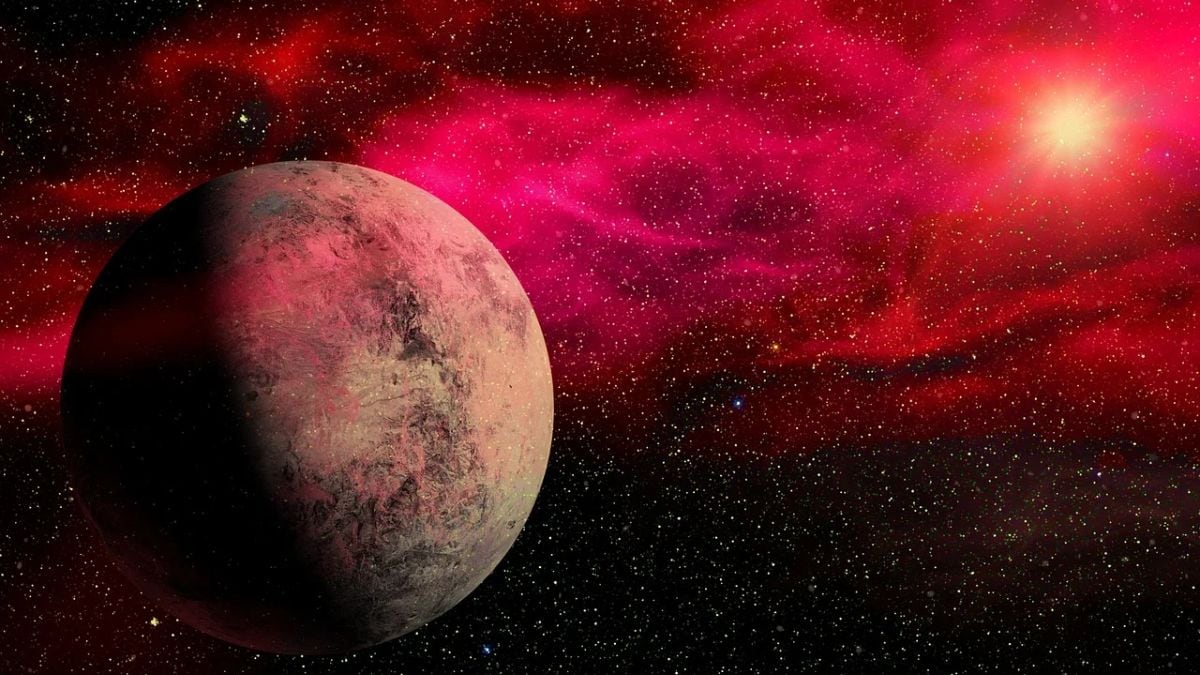
A super-Earth has been confirmed in the habitable zone of a nearby star, raising possibilities for future studies on potentially life-supporting planets. The discovery follows over two decades of observations and has been credited to a team of international researchers. Initially detected two years ago, the planet, named HD 20794 d, is situated 20 light years from Earth and has a mass six times that of Earth. Scientists suggest its orbit places it at an optimal distance from its star to sustain liquid water, a key factor for habitability.
Observational Data Confirms Planet’s Existence
According to a study published in Astronomy & Astrophysics, HD 20794 d was first identified as a possible exoplanet by Dr. Michael Cretignier from the University of Oxford in 2022. Data from the HARPS (High Accuracy Radial Velocity Planet Searcher) spectrograph at the La Silla Observatory in Chile indicated periodic shifts in the light spectrum of the host star, suggesting gravitational influence from an orbiting planet. However, initial findings lacked definitive confirmation due to the faintness of the signal, which led to doubts over whether the anomaly was planetary, instrumental, or caused by stellar activity.
To validate the discovery, data spanning over 20 years from both HARPS and ESPRESSO, an advanced spectrograph also based in Chile, were analysed. As reported by phys.org, Dr. Cretignier said that they have worked on data analysis for years and are gradually analysing and eliminating all possible sources of contamination. The confirmation required advanced processing techniques to separate the planetary signal from background interference.
Implications for Future Space Missions
Dr. Cretignier expressed both excitement and relief upon confirmation of the planet. He stated that great joy was naturally felt when the planet’s existence could be confirmed. Relief was also experienced, as the original signal had been at the edge of the spectrograph’s detection limit, making it difficult at that time to be completely convinced of the signal’s authenticity. He further stated that HD 20794 d’s proximity to Earth makes it a prime candidate for future missions aiming to capture direct images of exoplanets.
Despite its placement in the habitable zone, the planet’s elliptical orbit raises questions about its suitability for life. Its changing distance from the star moves it between the inner and outer edges of the habitable zone, potentially subjecting it to extreme temperature variations.
Potential for Further Study
HD 20794 d is expected to be a focal point for upcoming projects like the Extremely Large Telescope, the Habitable Worlds Observatory, and the Large Interferometer For Exoplanets (LIFE). These instruments aim to study exoplanet atmospheres in search of biosignatures that could indicate life.
