


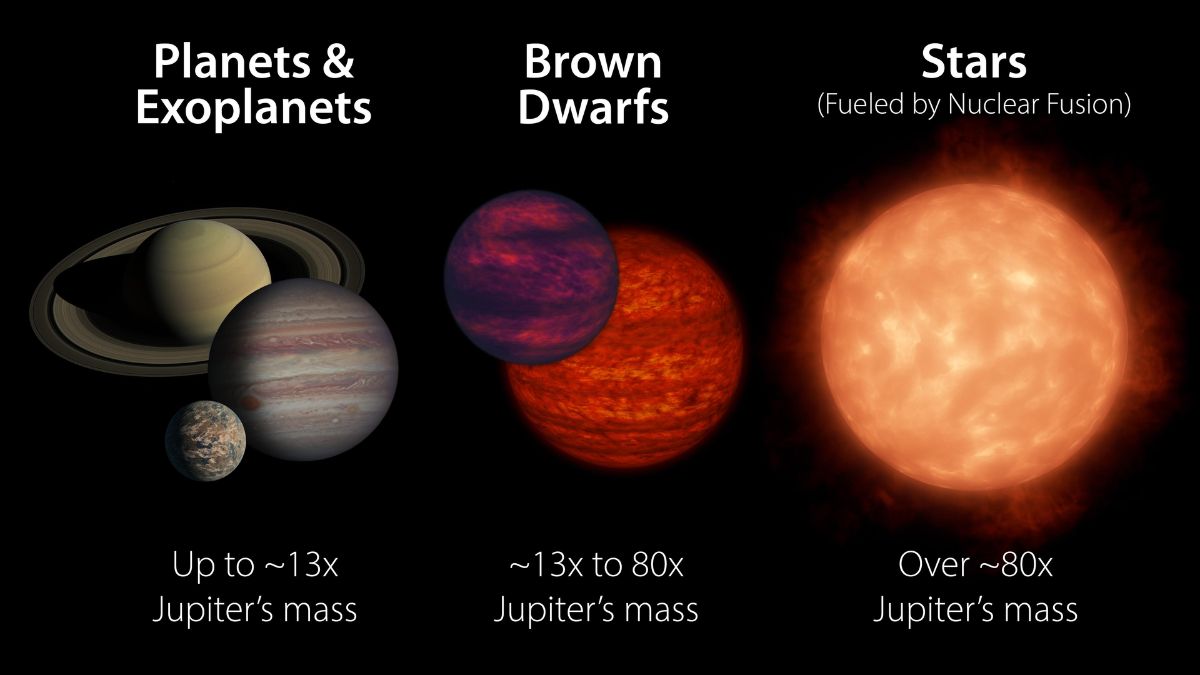
High-resolution spectroscopic observations have offered a deeper understanding of HD 206893 B, a brown dwarf orbiting the star HD 206893. The Keck Planet Imager and Characterizer (KPIC) was used by astronomers to examine this substellar object, revealing critical details about its atmospheric composition, mass, and formation. The findings contribute to ongoing research on brown dwarfs and their role within planetary systems. Located approximately 133 light-years away, HD 206893 B has drawn attention due to its position within a circumstellar debris disk, prompting further investigation into its origins and influence on the surrounding environment.
Observational Data and Findings
According to the study published on the arXiv pre-print server, high-resolution spectroscopy was conducted to analyse the brown dwarf’s atmospheric parameters. Led by Ben Sappey from the University of California, San Diego (UCSD), the research team implemented a forward-modelled Bayesian approach to interpret spectral data. The results indicated that HD 206893 B possesses a radius of roughly 1.11 times that of Jupiter and a mass of about 22.7 Jupiter masses. The brown dwarf’s effective temperature was estimated to be around 1,634 K, while its age was calculated at approximately 112 million years.
Formation and Atmospheric Composition
The collected data also provided insights into the brown dwarf’s formation scenario. The atmospheric carbon-to-oxygen (C/O) ratio was determined to be 0.57, aligning closely with the solar value. This ratio is often used to assess planetary formation mechanisms, with the findings suggesting either core accretion or disk fragmentation processes. Given its location at an approximate distance of 11.62 AU from its host star, the brown dwarf is believed to have formed through core accretion rather than disk fragmentation, which typically results in planet formation at significantly greater distances.
Future Investigations
As reported by phys.org, as per researchers, further studies are needed to refine the understanding of HD 206893 B’s formation and atmospheric properties. Observations using the Near Infrared Spectrograph (NIRSpec) onboard the James Webb Space Telescope (JWST) have been suggested. The advanced capabilities of JWST could provide more precise measurements of elemental ratios such as carbon-to-sulfur (C/S), which may offer a clearer picture of the brown dwarf’s formation history and its relationship to the surrounding debris disk. Continued monitoring of this system is expected to enhance knowledge of substellar objects and their complex interactions within planetary environments.
For the latest tech news and reviews, follow Gadgets 360 on X, Facebook, WhatsApp, Threads and Google News. For the latest videos on gadgets and tech, subscribe to our YouTube channel. If you want to know everything about top influencers, follow our in-house Who’sThat360 on Instagram and YouTube.

Alphabet Faces Scrutiny on AI Spending as Google Cloud Growth Slows
Apple Vision Pro to Receive visionOS Update With PS VR2 Controller Support This Year: Gurman
