


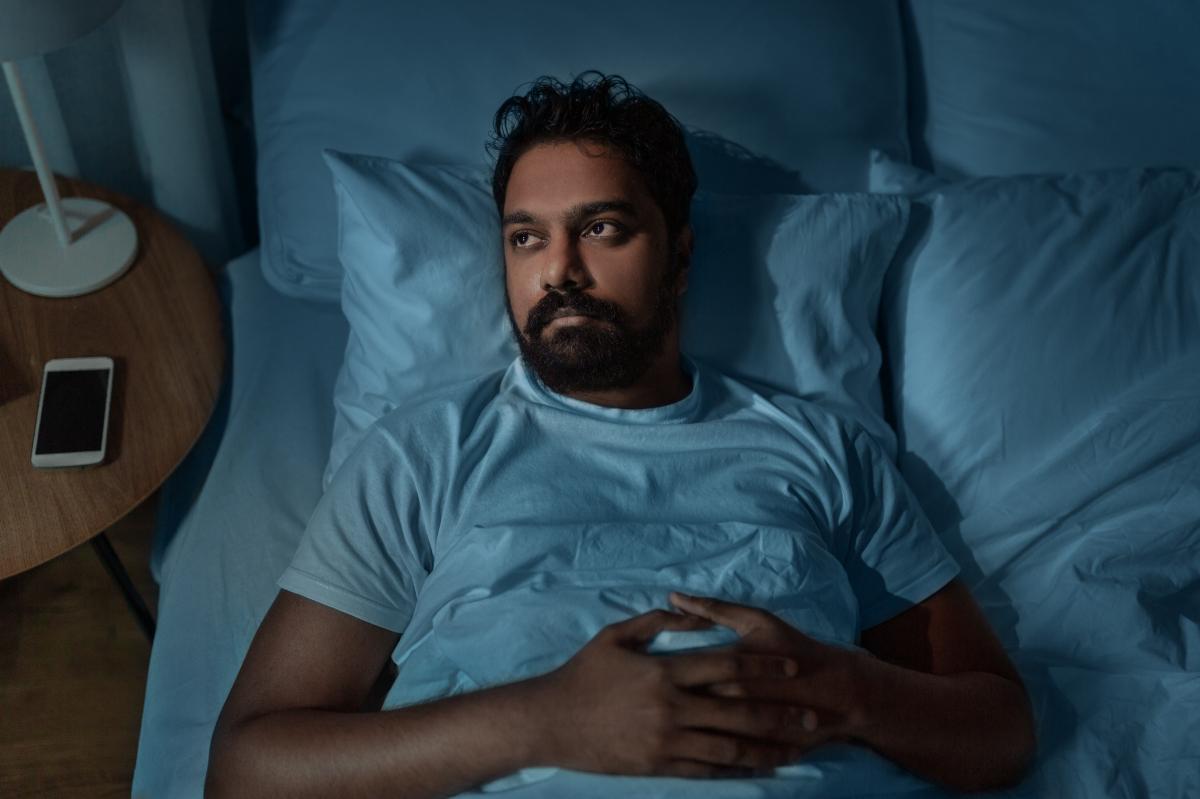
Forget counting sheep.
Across the country, roughly 1 in 3 American adults get less than the recommended seven hours of sleep each night, leaving millions to muddle through the next day on fumes.
But new research suggests adding a surprisingly simple activity to your nighttime routine could help keep your brain sharp — even when you haven’t gotten enough shut-eye.
You might just have to break a sweat before hitting the hay.
In the study, scientists at Concordia University in Montreal recruited 88 healthy young adults to see whether physical activity could help counter the effects of sleep deprivation on memory.
First, everyone completed a computer task in which they memorized 80 face-name pairs. When researchers tested them immediately afterward, all of the participants performed equally well.
The volunteers were then randomly split into four groups.
Two groups pedaled a stationary bike for 30 minutes, including five-minute warm-up and cool-down periods. One of those groups was then allowed to sleep for 8.5 hours, while the other got just 4.5 hours.
The other two groups followed the same sleep schedules, but sat quietly in a chair for 40 minutes instead of exercising before bed.
The well-rested groups slept from 11 p.m. to 7:30 a.m., while the sleep-deprived groups snoozed from 2 a.m. to 7:30 a.m. As they slept, electrodes attached to their heads tracked their brain waves, eye movements and heart activity.
After waking, the participants were tested on the 80 face-name pairs they had studied, along with 40 new ones, to see how much they could still remember.
Normally, cutting sleep nearly in half, from 8.5 hours to 4.5 hours, comes with a significant drop in memory performance. But the participants who pedaled a stationary bike for 30 minutes before their short sleep performed significantly better than those who skipped the workout.
In fact, the scientists found that those who exercised before bed performed statistically as well on the memory test as participants who got a full 8.5 hours of sleep.
That’s notable because too little sleep can take a serious toll on the brain, particularly the hippocampus, a region essential for memory and functions tied to learning, decision-making and emotional health.
The effects may be especially pronounced when sleep deprivation cuts into slow-wave sleep, the deepest stage of rest. During this period, your brain processes recently learned information and helps move it into long-term storage.
Miss that crucial processing window, and your ability to learn and retain information can suffer. The Sleep Foundation estimates that insufficient sleep can reduce learning and retention capacity by as much as 40%.
Until now, scientists haven’t identified many effective ways to blunt sleep deprivation’s impact on memory — but exercise may be one.
The team found that the pre-bed workout appeared to protect newly learned memories as they were consolidated and stabilized during sleep, even when participants got less shut-eye than recommended.
People who naturally spent more time in slow-wave sleep appeared to get an even bigger memory benefit from exercise.
But your recall isn’t the only thing that benefits from moving your body before bedtime.
Physical activity can lower stress hormones such as cortisol and trigger the release of endorphins, potentially helping calm the mind and quiet anxious thoughts — two things that can make it easier to drift off.
Exercise can also help regulate the body’s internal clock, making it easier to fall asleep and wake up on a consistent schedule. And that healthy dose of physical fatigue can make a night of rest feel more restorative.
It’s just another reason to aim for the recommended 150 minutes of moderate-intensity aerobic exercise each week — a target fewer than half of American adults currently meet.
The scientists said that if the findings hold up in larger studies, a moderate evening workout could eventually become a tool for helping protect against the cognitive effects of too little sleep.
That could come in handy for a lot of Americans.
Gallup polling shows that more than half of US adults say they would feel better if they got more sleep. And in 2023, 20% reported getting five hours or less per night — up 10% from a decade earlier.
