

Close Menu
  • Home
  • Stock
  • Parenting
  • Personal
  • Fashion & Beauty
  • Finance & Business
  • Marketing
  • Health & Fitness
  • Tech & Gadgets
  • Travel & Adventure

Subscribe to Updates

Subscribe to our newsletter and never miss our latest news

Subscribe my Newsletter for New Posts & tips Let's stay updated!

What's Hot

4 longevity mistakes that catch up to women after menopause

agosto 24, 2026

‘Lust-free’ gyms say they’re safe spaces for Christian men

agosto 21, 2026

Experimental ‘exercise pill’ may reduce appetite and mimic physical activity

agosto 21, 2026
Facebook X (Twitter) Instagram
  • Home
  • Contact us
  • DMCA
  • Política de Privacidad
  • Publicidad en DD Noticias
  • Sobre Nosotros
  • Términos y Condiciones
Facebook X (Twitter) Instagram
DD Noticias: Tu fuente de inspiración diariaDD Noticias: Tu fuente de inspiración diaria
  • Home
  • Stock
  • Parenting
  • Personal
  • Fashion & Beauty
  • Finance & Business
  • Marketing
  • Health & Fitness
  • Tech & Gadgets
  • Travel & Adventure
DD Noticias: Tu fuente de inspiración diariaDD Noticias: Tu fuente de inspiración diaria
Home » China Uses Gravitational Slingshots to Rescue Two Satellites Stuck in Orbit for 123 Days
Technology & Gadgets

China Uses Gravitational Slingshots to Rescue Two Satellites Stuck in Orbit for 123 Days

Jane AustenBy Jane Austenabril 30, 2025No hay comentarios3 Mins Read
Facebook Twitter Pinterest LinkedIn Tumblr Email
China Uses Gravitational Slingshots to Rescue Two Satellites Stuck in Orbit for 123 Days
Share
Facebook Twitter LinkedIn Pinterest Email


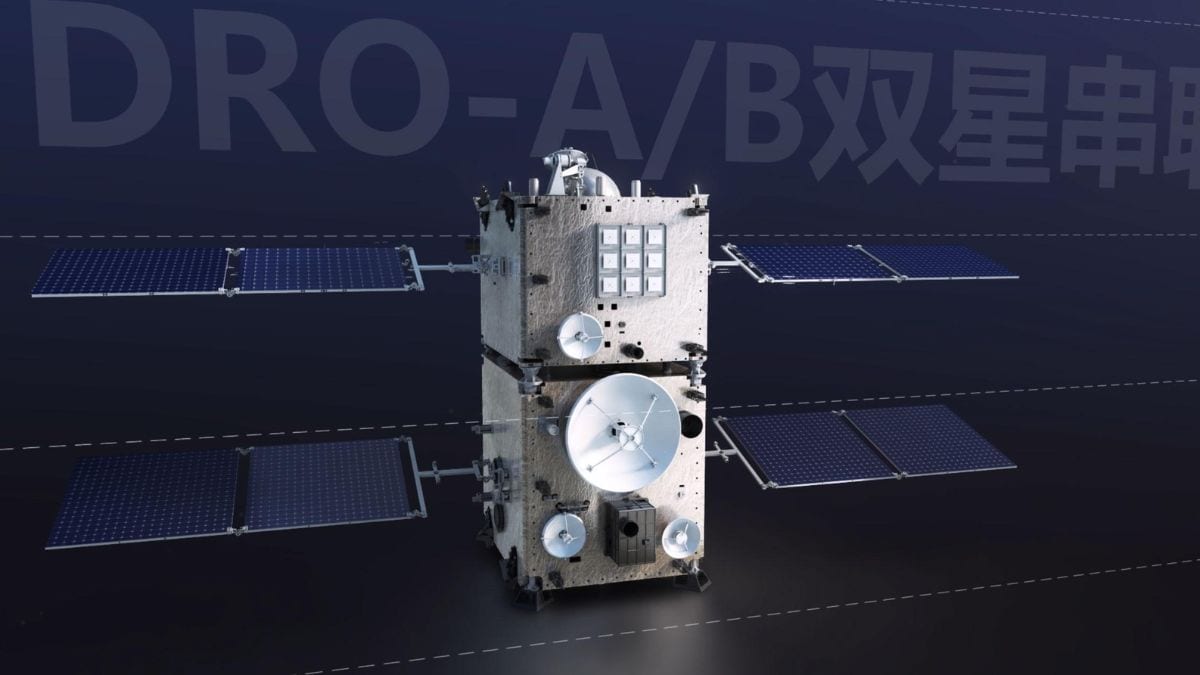
In a major display of technical ingenuity, China has successfully rescued two satellites—DRO-A and DRO-B—that were stuck in the wrong orbit for 123 days following a launch failure. The satellites, part of China’s distant retrograde orbit (DRO) constellation, were saved using a series of complex gravitational slingshot manoeuvres that turned a near-disaster into a milestone in space navigation. This recovery mission not only preserved critical hardware but also highlighted China’s growing expertise in orbital mechanics, space rescue operations, and deep-space navigation technologies.

Innovative Thinking in critical condition

According to a recent story by CGTN, on March 15, 2024, China launched two satellites that were mounted on a Long March-2C rocket with a Yuanzheng-1S upper stage. While the launch initially appeared to be successful, a malfunction in the upper stage made the satellites tumble and head towards Earth much closer than planned. With limited power and damaged systems, conventional recovery was impossible.

Zhang Hao, a researcher at the Technology and Engineering Center for Space Utilisation (CSU), described the moment the team learned of the issue in an interview with CGTN Digital: “If the satellites were destroyed, that would have been a waste of the years of effort that we put in and the money invested in the mission. It would also be a mental blow to the team.”

CSU engineers divided into two teams—one worked to stabilise the spinning satellites, while Zhang’s team focused on calculating a new trajectory using gravitational assists. “We calculated the best route to move the satellites back on track,” Zhang explained during the interview.

A Gravity-Assisted Comeback

The mission exploited the gravitational pulls of Earth, the Moon, and even the Sun to carefully nudge the satellites into their target DRO positions. The technique is commonly applied in deep space missions, and it needs a minimal amount of fuel, which makes it a feasible way to bypass the fuel shortage. The most critical manoeuvre lasted just 20 minutes but took weeks of preparation. “I got more and more stressed as the clock ticked,” Zhang admitted. “I just kept staring at the screen until it said ‘normal, ‘” he further added.

Now successfully positioned, DRO-A and DRO-B have joined the earlier DRO-L to form a three-satellite constellation. According to CSU researcher Mao Xinyuan, the network will drastically reduce spacecraft positioning times—from days to just a few hours—and support autonomous navigation between Earth and the Moon.

This mission not only salvaged valuable satellites but also demonstrated China’s growing capability in autonomous spaceflight and long-distance orbital engineering.


Source link

Share. Facebook Twitter Pinterest LinkedIn Tumblr Email
Jane Austen
  • Website

Related Posts

Bitcoin Core v30 allenta OP_RETURN: Alcuni miner S19 affrontano una pressione di booster

noviembre 17, 2025

Bitcoin Core v30: No es una actualización — es presionar el 「booster de eliminación de mineros」

noviembre 17, 2025

Pika Labs Launches Social AI Video App on iOS, Unveils New Audio-Driven Video Generation AI Model

agosto 12, 2025
Add A Comment
Leave A Reply Cancel Reply

Editors Picks

Fast fashion pioneer Forever 21 files for bankruptcy — again

marzo 18, 2025

Dow gains 350 points as stocks climb for 2nd day after S&P 500 enters correction

marzo 18, 2025

Yellow Creditors Have Own Plan to Share Trucker’s $550 Million

marzo 18, 2025

Alphabet in Talks to Buy Startup Wiz for $30 Billion, WSJ Says

marzo 18, 2025
Top Reviews
DD Noticias: Tu fuente de inspiración diaria
Facebook X (Twitter) Instagram Pinterest Vimeo YouTube
  • Home
  • Contact us
  • DMCA
  • Política de Privacidad
  • Publicidad en DD Noticias
  • Sobre Nosotros
  • Términos y Condiciones
© 2026 ddnoticias. Designed by ddnoticias.

Type above and press Enter to search. Press Esc to cancel.