


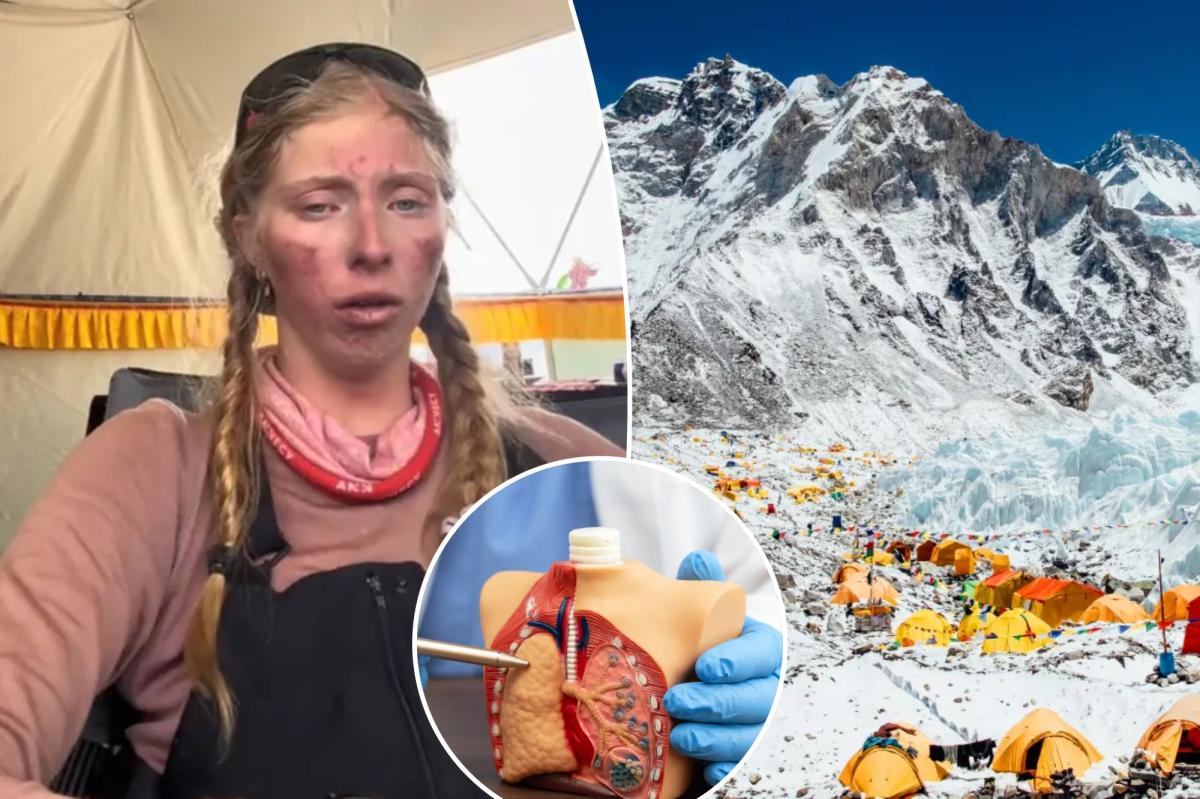
She set out to conquer the world’s highest peak — and nearly didn’t make it back.
Bianca Adler was left gasping for air after spending nearly four days in Mount Everest’s notorious “Death Zone,” an icy, treacherous stretch so high up, there’s barely enough oxygen to survive for even short periods of time.
“I feel horrible,” the 17-year-old Australian croaked in a now-viral TikTok, her face battered by wind and cold, lips cracked and voice barely a whisper. “My neck, my throat, my lungs.”
The teenage mountaineer had spent days battling some of the planet’s harshest terrain to reach a staggering 27,723 ft — just 1312.34 ft shy of the summit — before she was forced to turn back amid fierce winds and the onset of frostbite.
Adler had made the climb with her father, but he’d tapped out earlier after being struck by snow blindness.
“On the way down, he was still sick and I was exhausted,” she wrote on Instagram. “We both got diagnosed with HAPE (high altitude pulmonary edema) and dehydration (which is normal for mountaineering). I still feel quite sick and extremely exhausted, so I’m taking time to recover.”
Adler’s harrowing journey has stunned viewers online, with many shocked that a teenager would attempt one of the most dangerous climbs on Earth.
Intrigued — and slightly horrified — by her ascent, The Post spoke to Dr. Harly Greenberg, chief of pulmonary, critical care and sleep Medicine at Northwell Health, who broke down what happens to the human body in the Death Zone.
“Risks are severe at extreme altitudes above 18,000 ft, and the ‘death zone’ on Everest is 26,000 ft and above,” he said.
What is hypoxia — and what are the symptoms?
Without proper acclimation, one of the biggest dangers climbers face at such heights is hypoxia, which happens when the body’s tissues don’t get enough oxygen.
“Hypoxia disrupts energy production and critical processes within our cells and disrupts organ function,” said Greenberg.
If left unchecked, hypoxia can lead to complications such as acute mountain sickness, which often strikes when climbers ascend too rapidly.
“The first signs of acute mountain sickness relate to the brain,” Greenberg said, explaining that the organ is especially vulnerable because its cells need oxygen to work properly.
“At first, the blood vessels in the brain dilate, which can cause headache and nausea,” he said. “Then, fatigue, lightheadedness, nausea and disturbed sleep and insomnia can occur.”
These symptoms typically improve within one to three days as the body acclimates to the low oxygen levels, Greenberg said. However, in some cases, climbers can develop high altitude cerebral edema.
This critical condition strikes when fluid leaks from the blood vessels into brain tissue, leading to a progressive decline in mental function and causing symptoms such as confusion, impaired thinking, drowsiness and loss of consciousness.
“It may be fatal if not treated and the person does not descend to lower altitude,” Greenberg stressed.
What is high altitude pulmonary edema?
Within Everest’s Death Zone, climbers also face the risk of high altitude pulmonary edema, the illness that nearly took down Adler and her father.
When hypoxia sets in, Greenberg explained, the pulmonary arteries — or blood vessels that carry blood to the lungs — constrict, leading to a rise in blood pressure.
This increased pressure forces fluid out of the blood vessels, flooding the lung’s air sacs and impairing their ability to absorb oxygen and deliver it to red blood cells for transport throughout the body.
Symptoms may include a persistent cough, feelings of suffocation, shortness of breath even at rest and skin discoloration.
“High altitude pulmonary edema can develop two or more days after ascent to high altitude and can be life threatening,” Greenberg said. “It is the most common cause of death in high altitude illness.”
Adding to the danger, low oxygen levels at extreme altitude can also affect the eyes, leading to high-altitude retinopathy.
The condition develops when the blood vessels in the retina expand, leading to swelling and bleeding that can affect vision.
“Most effects of high altitude on the eye are reversible with descent, but permanent visual damage can occur,” Greenberg said.
Preparing for the Death Zone
“When planning a trip to a high altitude, overall health should be assessed,” Greenberg advised.
People with lung disease, heart disease, high blood pressure, sickle cell disease and
sleep disorders such as sleep apnea may be particularly vulnerable to high altitude’s effects and should avoid such climbs if possible, he stressed.
“Ascent to high altitude is less likely to cause problems if done gradually with time allowed for the body’s compensatory mechanisms to develop,” Greenberg explained.
For example, heart rate increases to deliver more oxygenated blood to tissues, while the kidneys produce more erythropoietin, a hormone that boosts red blood cell production.
“These compensatory mechanisms begin shortly after ascent to high altitude but can take days to weeks to become fully effective,” Greenberg said.
How can people prepare for Everest?
But even before you lace up your climbing boots, there are steps you can take to build up your body’s strength for the mountain.
“Pre-trip acclimatization has been used to help prepare for high altitude,” Greenberg said. “This strategy entails simulation of high altitude in chambers that produce hypobaric hypoxia.”
By spending time sleeping or exercising in these chambers at simulated altitude, your body can build more red blood cells and improve oxygen transport, which may reduce the risk of altitude sickness and shorten the time needed to acclimatize naturally on-site.
Another technique sometimes used is intermittent normobaric hypoxic exposure, where people alternate between breathing normal air and air with lower oxygen levels like those found at high altitudes.
However, Greenberg said the evidence is limited regarding its effectiveness in preventing high altitude sickness.
